
Payments Optimization Reimagined:
From Cost to Strategy
Pillar 4 – Redundancy and Reliability







The Payments Optimization Reimagined 6-Pillar Series
For many retailers, “payments optimization” has traditionally meant one thing: reducing processing costs. But as payment technologies evolve, regulations tighten, fraud increases, and customer expectations shift, payments can no longer be treated as a back-office expense to manage. They represent a core business system – one that directly influences revenue, customer experience operational efficiency, and brand trust.
The W. Capra whitepaper, “Payments Optimization Reimagined: From Cost to Strategy,” explores a modern framework for retailers. Each pillar dives into a critical dimension of building a payments ecosystem that supports how your customers want to buy, how your technology needs to function, and how your business plans to grow.
Customer Strategy · Technology Alignment · Risk Mitigation
Redundancy & Reliability · Future Flexibility · Decision Intelligence
Pillar 4 – Redundancy and Reliability: Ensuring Resilient, Always-On Payments Infrastructure
The ability to process payments and accept transactions whenever and however a customer wants to do business is fundamental to payments optimization. Companies that are unable to reliably accept payments risk losing sales, or worse, losing the customer.

Disruptions come at a high cost.
In May 2025, Victoria’s Secret lost $20 million in revenue when both stores and e-commerce went dark for four days – a stark reminder of what’s at stake. In highly competitive retail environments, even a short disruption to the payment system can translate into immediate and far-reaching impact, including revenue losses from abandoned shopping carts and longer-term hits due to lost customer loyalty. Frustrated shoppers may choose not to return even if your system comes back online quickly. In the case of sustained outages, brand perception and trust erode rapidly, especially among those customers worried about data security. Behind the scenes, inventory accuracy, reconciliation, and reporting can all be negatively affected, piling on the operational headaches.
Ensuring availability is a significant investment.
Of course, avoiding such consequences comes at a price, and redundancy is inherently a non-low-cost strategy. Implementing secondary systems is a significant investment, but it represents a critical investment in availability and ensuring a consistent customer experience. Such an approach often involves deploying two gateways and/or two acquirers and doing the upkeep to ensure both systems are properly integrated, tested, synchronized, and maintained. If one goes down, the other serves as backup, ensuring multiple pathways to route transactions and navigate around any disruptions.
More sophisticated payment solutions afford retailers the flexibility to choose exactly where each transaction is routed, enabling optimization for the best possible outcome. In some cases, the priority is cost: sending a transaction through Provider A may carry a lower processing fee than Provider B. In other cases, the goal is to maximize approvals. Provider B might charge slightly more per transaction, but if its network consistently delivers higher authorization rates, the increased cost is outweighed by the additional revenue from approved sales. In practice, smart routing allows retailers to dynamically balance cost savings and conversion rates, ensuring each transaction takes the most advantageous path.
Redundant systems are not for every retailer.
Retailers need to be able to justify the expense of multiple systems, and not all retailers have the same level of need for such a solution. Factors like business model, margins, customer demographics, and preferred payment types all factor into the redundancy decision. For example, businesses operating on very slim margins benefit from having multiple processors because it allows them to route transactions to the lowest-cost option at scale, preserving profitability. Similarly, if a significant portion of shoppers depend on a specific card network or digital wallet, a backup provider ensures those payments can still be accepted during an outage or network issue.
Digital-heavy, saturated businesses where most orders come through the website or mobile app and fulfillment is expected in real-time typically have much at stake if a payment system fails. These retailers often have just one chance to capture a sale. Consider a customer ordering fast food or a pizza online; if the payment does not go through immediately on the first site, the customer will likely simply choose another restaurant from which to place the order.
However, the more high-end or specialized the product is, the less likely the purchase is to be time sensitive. Someone purchasing a Louis Vuitton bag, for example, is typically not under the same time restrictions as someone trying to put dinner on the table. Plus, there are not as many competitors for customers to switch to in the moment. Even so, for high-ticket items, the risk of a single missed transaction due to an outage can mean losing thousands of dollars or more. High-end retailers need to carefully consider their options; some may do better investing in white-glove customer service and making knowledgeable representatives immediately available to address payment issues versus implementing redundant systems to ensure every sale goes through on the first try.
Redundancy is best viewed as a strategic lever.
Making the choice to invest in redundancy means viewing it not merely as an insurance policy; but as a tool that can materially influence revenue performance, customer experience, and operational stability. When deployed deliberately, it gives retailers far more control over how transactions are routed, how costs are managed, and how customer expectations are met across every channel. At the same time, redundancy builds organizational resilience, making payment failure an isolated event instead of a full-scale disruptions and empowering retailers to shift from reactive problem-solving to proactive optimization.
« Pillar 3: Risk Mitigation Pillar 5: Future Flexibility »
Download the full Payments Optimization Reimagined: From Cost to Strategy whitepaper now.
Related Insights
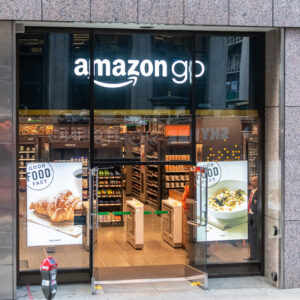
5 Ways Amazon Go Succeeded: The Catalyst Retail Needed
For a moment, Amazon Go was supposed to be the future of retail. Walk in, grab what you need, and walk out – no lines, no registers, no friction. When it debuted in 2018, some predicted it would redefine the industry.

Payments Optimization Reimagined: Pillar 6 – Decision Intelligence
Payments generate some of the richest, most actionable data in the business. Every transaction contains insights into customer behavior, operational efficiency, cost, and platform performance.

Payments Optimization Reimagined: Pillar 5 – Future Flexibility
Payment innovation moves fast – methods like PayPal, Klarna, and Apple Pay went from “emerging” to “expected” in the blink of an eye, and new options will continue to surface just as quickly.

Payments Optimization Reimagined: Pillar 3 – Risk Mitigation
Retailers can no longer treat payments compliance as a box-checking exercise. Regulatory mandates, card-network requirements, and security expectations evolve constantly […]
Want to stay in touch? Subscribe to the Newsletter