
Case Study
From “We Think” to “We Know”
Transforming Data into True Business Intelligence
Retailers across verticals face a common challenge: fragmented data
Critical business data often resides across multiple systems, teams, and reporting environments. While this case study focuses on a global specialty retailer, the need for trusted data, shared visibility, and informed decision-making extends across retail formats and functions.
About the Client
The client is a global designer, distributor, and retailer of technical athletic apparel, footwear and accessories. The company has grown to over $10 billion in revenue and over 750 store locations in over 25 countries and is renowned for its technical clothing and innovations in fabrics and functional designs
Situation
When the client’s outbound logistics team noticed its numbers not meeting expected projections, the company’s leaders immediately wanted to know why.
Key Performance Indicators (KPIs), like volume and units per carton, help companies track how efficiently they are getting product into their customers’ hands. While the team had no shortage of data to crunch, it didn’t take long to realize the company had more than an operational challenge on its hands. It also had an opportunity to mature its data quality and integrity that would enable its supply chain and logistics departments to conduct root cause analyses and close efficiency gaps.
Key Issues
- Failure to track slow changing product dimensions making analysis and decision-making time consuming
- Disparate data sets across the supply chain with no single source of truth
- A lack of fit-for-purpose tools for data analysis purposes
- Complex data architecture with limited functionality for key end users
Before volume and freight issues could be solved,
– – the company first had to tackle its data practices.

Solution
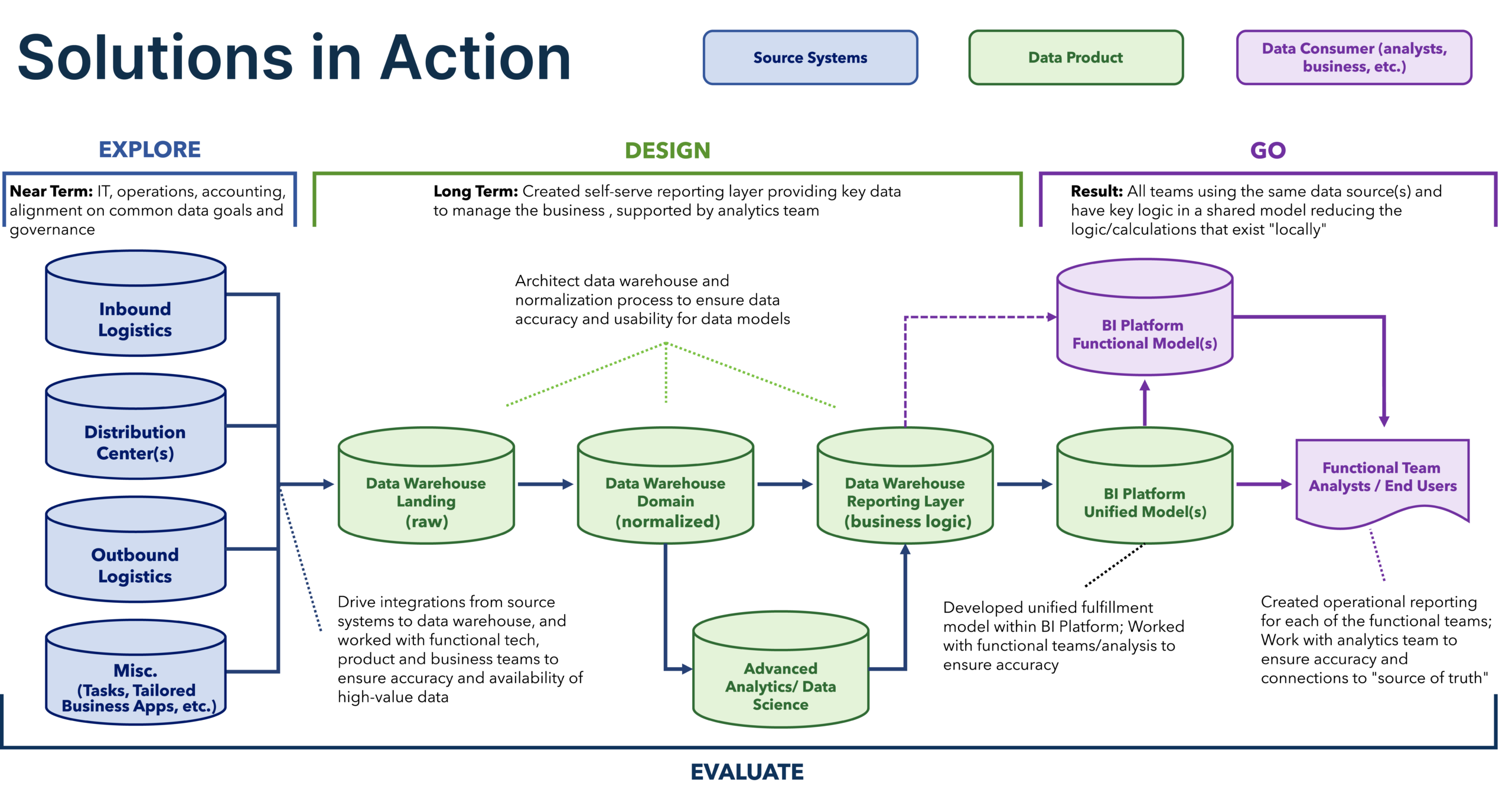
The client asked W. Capra to complete data architecture and modeling work needed to facilitate root cause analyses and create tailored and automated reporting for each functional department.
W. Capra executed a three-part data transformation:
Part 1: Developed a new data warehouse and new data models to provide one single source of truth for the business
Business intelligence is only as good as the data it’s based on. In our client’s case, functional silos, the use of different source systems by different departments, and multiple versions of the Warehouse Management System resulted in myriad disparate data sets of varying degrees of quality and accuracy in use across the supply chain. In short, different leaders had different views of what was happening in the business depending on which data set they were accessing.
To improve its ability to share and trust its data and make informed business decisions across the enterprise, the project began with data assessment and optimization work to clean, normalize, and merge data from multiple databases into a consolidated data warehouse. With a single source of truth established, the team then built out data models for each functional department. This work ensured access to accurate, shared data that is compatible with each user’s system requirements and capabilities, thus facilitating better and faster decision making across the supply chain.
Part 2: Integrated third-party data for a more comprehensive picture of the business
After wrangling the company’s internal datasets, the W. Capra team focused on net new integrations and bringing in critical data from third-parties such as FedEx and freight audit and payment partners. With input from end users, including the global fulfillment analytics team, W. Capra helped the client optimize its data flows and eliminate any gaps between the sources of the data and the business users needing the information to get their jobs done and drive the greatest possible value for the business.
Part 3: Created new tailored applications to solve complex data challenges
With its data foundation established and its newfound abilities to find actionable insights in its numbers, the company was ready to take its data culture to the next level. The W. Capra team partnered with different departments to understand their most pressing challenges and create applications tailormade to achieve specific goals. New solutions included:
- A manufacturing excellence app to address the problem of poor data coming from upstream supply chain vendors and allow the client to properly and cleanly capture quality defect data and create a vendor scorecard.
- A research app built to consolidate research into a searchable hub and allow the company’s materials scientists and others in the innovation group to easily and securely exchange research and development data.
- An operations management app designed to eliminate dependency on spreadsheets and provide DC supervisors with the ability to more efficiently manage their labor force and easily access up-to-the-minute training, safety, and labor performance monitoring as well as other key people and culture data.


Impact
What started as a simple question about box capacity grew into a data transformation that dramatically boosted our client’s data culture, maturity, and decision-making speed across the organization.
Business Intelligence is now a continuous journey for the company as it:
- Adds new datasets to the data warehouse
- Refines its business logic
- Enhances data models with input from business functional experts.
Since beginning the journey, the client:

Created a single source of truth across the supply chain that all business users can access and trust.
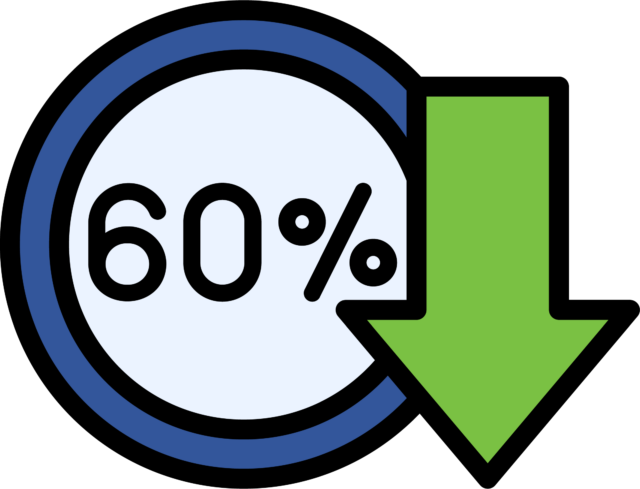
Reduced data warehousing and computation costs by 60% for the business by streamlining query development and reuse through simplified data architecture and models.

Empowered more business users to make better data-driven decisions more quickly, without requiring intimate knowledge of source systems.

Grew its analytics team from a few citizen developers to a cross-functional center of excellence with data scientists, analytics engineers, data analysts, and data engineers driving the organization’s data culture.






Want to stay in touch? Subscribe to the Newsletter